


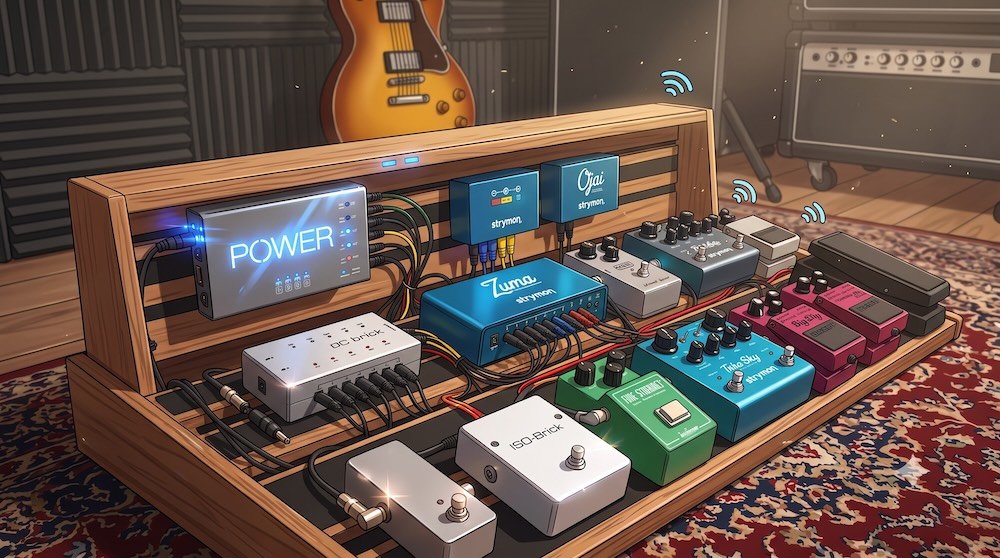
Whether you’re building a compact pedalboard for home practice or a professional rig for live performances, choosing the right guitar pedal power supply is just as important as choosing your pedals. Clean, reliable power helps reduce unwanted noise, protects your equipment, and ensures every pedal performs at its best.
In this guide, we’ll compare the most common ways to power your guitar pedals—from professional isolated power supplies to simple 9V batteries—so you can find the best solution for your setup.
Why Your Pedal Power Supply Matters
Every effects pedal needs stable, reliable power. Choosing the wrong power solution can lead to:
- Hum and electrical noise
- Pedals not turning on
- Random resets or dropouts
- Reduced performance
- Potential damage from incorrect voltage or polarity
Most modern guitar pedals use 9V DC center-negative power, but the best way to deliver that power depends on how many pedals you own and where you play.
Option 1: Isolated Pedal Power Supply (Best for Most Pedalboards)
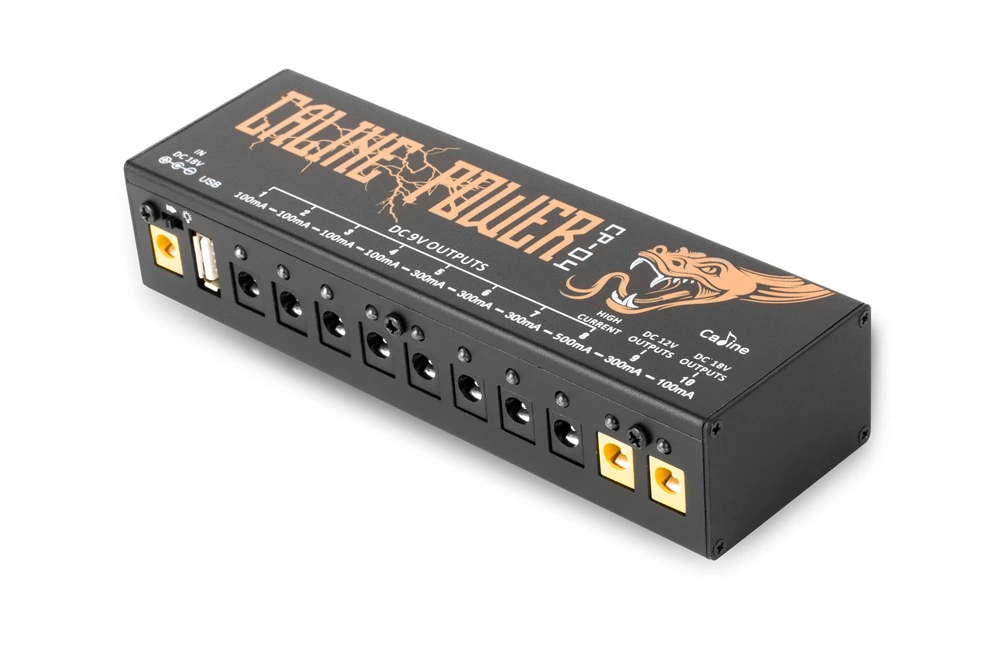 If you’re running several pedals, especially a mix of analog and digital effects, an isolated power supply is the best long-term investment.
Unlike a daisy chain, each output is electrically isolated, helping eliminate ground loops and unwanted noise while providing stable power to every pedal.
Benefits
- Lowest noise
- Cleanest signal
- Powers analog and digital pedals together
- Reliable for rehearsals and gigs
- Easy to expand your pedalboard
Best For
- Medium to large pedalboards
- Recording
- Live performances
- Players using multiple effects
Recommended: Caline CP-04 Isolated Power Supply
The Caline CP-04 features 10 isolated outputs, making it an excellent choice for growing pedalboards. It delivers clean, reliable power for overdrives, modulation, delays, reverbs, compressors, and many other effects.
👉 Product:
https://uniqtone.com/shop/caline-cp-04-isolated-guitar-pedal-power-supply-with-10-outputs/
Option 2: Rechargeable Isolated Power Supply
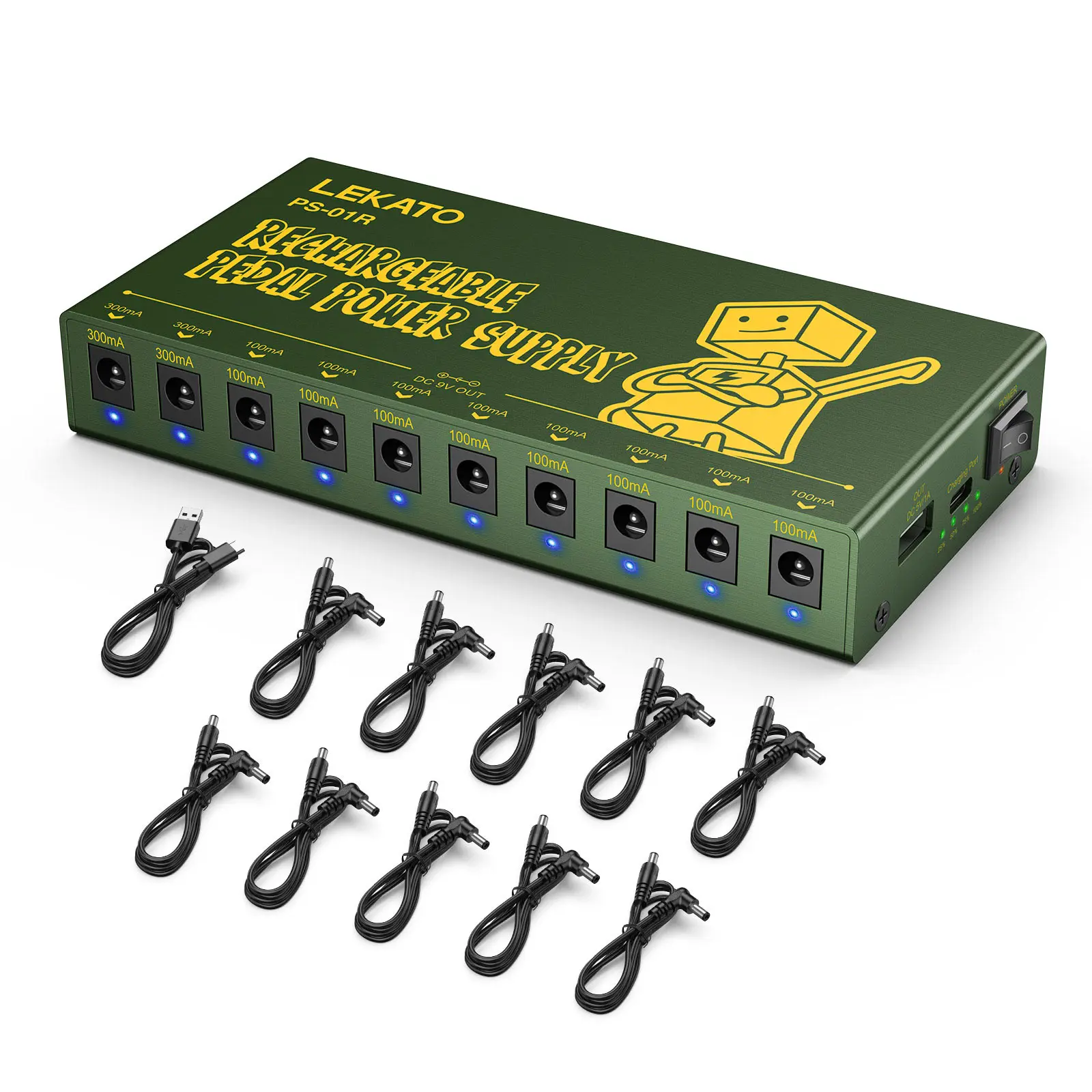 Need professional power without being tied to a wall outlet?
Rechargeable pedal power supplies combine isolated outputs with an internal rechargeable battery, allowing you to play almost anywhere.
Benefits
- No AC outlet required
- Quiet isolated outputs
- Ideal for travel
- Great for busking
- Portable and convenient
Best For
- Outdoor performances
- Home studios
- Mobile recording
- Travel pedalboards
Recommended: LEKATO PS-01R Rechargeable Power Supply
The LEKATO PS-01R includes 10 isolated outputs and a rechargeable battery, giving you professional-quality pedal power wherever you play.
Option 3: USB-Powered Pedal Power Supply
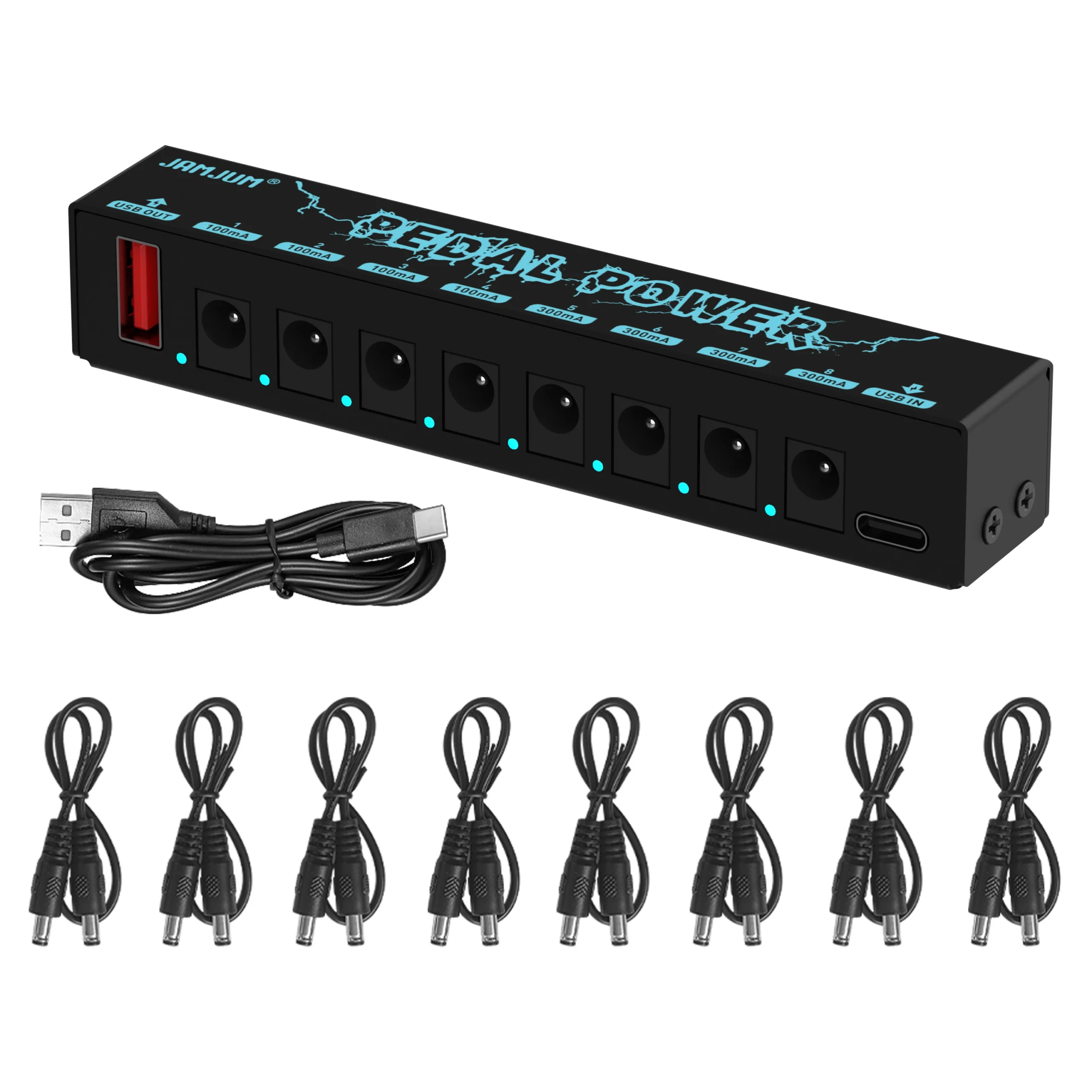 USB-powered pedal supplies offer a modern, lightweight alternative for smaller pedalboards.
They can run from:
- USB power banks
- Laptop USB ports
- USB chargers
- Portable battery packs
Benefits
- Extremely portable
- Great for travel
- Works with USB power banks
- Compact footprint
Best For
- Fly rigs
- Coffee shop gigs
- Home recording
- Small pedalboards
Recommended: Portable USB-Powered 8 Output Supply
This compact power supply provides eight 9V outputs, making it perfect for players who want a lightweight and flexible solution.
Product:
https://uniqtone.com/shop/portable-usb-powered-8-output-9v-guitar-pedal-power-supply/
Option 4: Daisy Chain Power Supply
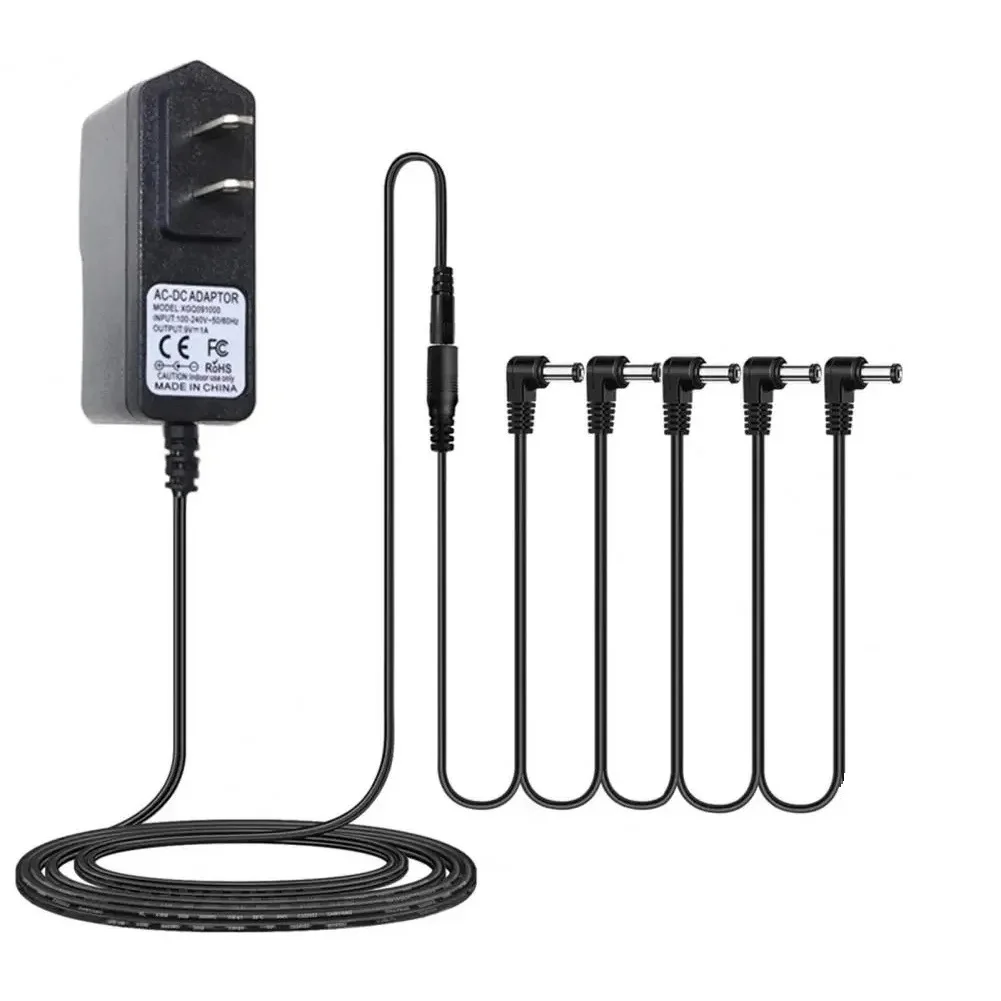 If you’re only powering a few standard analog pedals, a daisy chain remains one of the most affordable solutions.
One adapter powers multiple pedals using a shared cable.
Benefits
- Budget friendly
- Easy to set up
- Lightweight
- Perfect first upgrade
Limitations
Since every pedal shares the same power source, some digital pedals may introduce additional electrical noise.
Best For
- Small pedalboards
- Beginners
- Analog effects
- Home practice
Recommended: 9V Daisy Chain Power Supply
This simple solution is ideal for powering several compact pedals without investing in a larger isolated supply.
Product:
https://uniqtone.com/shop/9v-guitar-pedal-power-supply-daisy-chain/
Option 5: 9V Batteries
 Many compact pedals still include a battery compartment, making 9V batteries a simple and portable way to power individual pedals.
You have two main choices:
- Disposable 9V batteries – Convenient and widely available.
- Rechargeable 9V batteries – More economical over time and better for the environment if you play regularly.
Benefits
- Completely portable
- No cables
- Great for one or two pedals
- Excellent backup power
- Rechargeable batteries reduce waste and ongoing costs
Limitations
- Batteries eventually need replacing or recharging.
- Less practical for larger pedalboards.
- Digital pedals often drain batteries much faster than analog pedals.
Best For
- Single-pedal setups
- Vintage pedals
- Backup power
- Practice sessions
Turn a Battery Pedal into a Powered Pedal
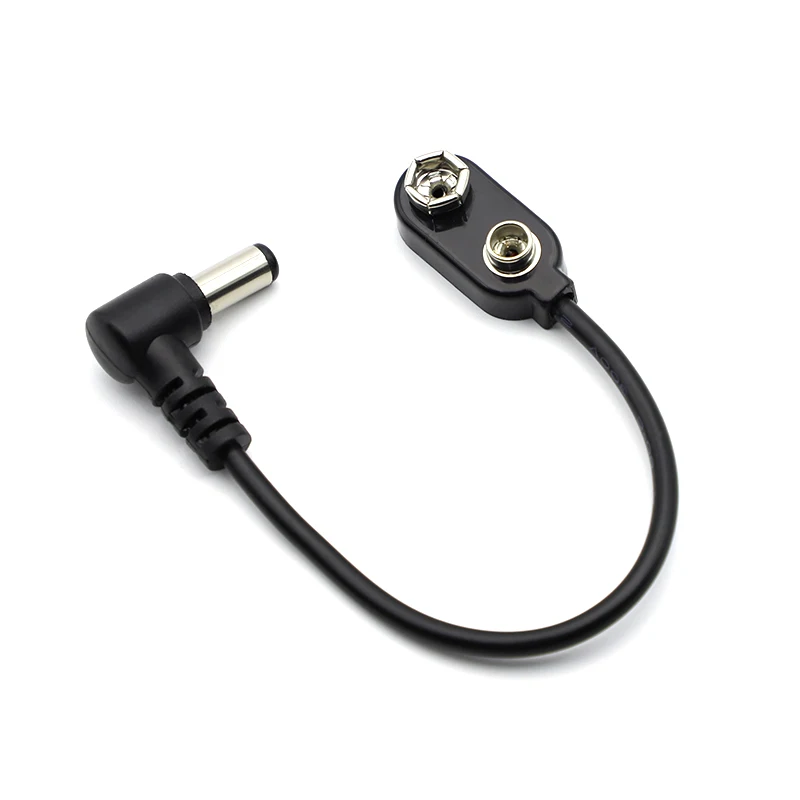
If your pedal uses a 9V battery but you’d prefer to power it from your pedalboard power supply, a 9V battery clip to DC converter cable is an inexpensive solution.
It connects to the pedal’s battery snap while allowing you to use a standard 9V DC power adapter.
Recommended: 9V Battery Clip to DC Power Cable
Product:
https://uniqtone.com/shop/9v-battery-clip-to-dc-power-cable-for-guitar-effects-pedals/
Which Power Supply Is Right for You?
| Your Setup | Recommended Solution |
|---|---|
| Large or growing pedalboard | Caline CP-04 Isolated Power Supply |
| Portable professional setup | LEKATO PS-01R Rechargeable Power Supply |
| Travel or USB-powered rig | USB-Powered 8 Output Supply |
| 2–6 analog pedals | Daisy Chain Power Supply |
| Single pedal or backup | Rechargeable or standard 9V battery |
Final Thoughts
The best guitar pedal power supply isn’t necessarily the most expensive—it’s the one that matches the size of your pedalboard and the way you play.
If you’re building a long-term pedalboard, an isolated power supply is usually the best investment for clean, reliable performance. If you prefer a compact or portable setup, rechargeable and USB-powered solutions offer excellent flexibility. And for simple rigs or vintage pedals, a 9V battery or battery clip converter remains a practical choice.
No matter where you are in your guitar journey, choosing the right power solution will help your pedals perform reliably, reduce unwanted noise, and leave you free to focus on what matters most—making music.

