


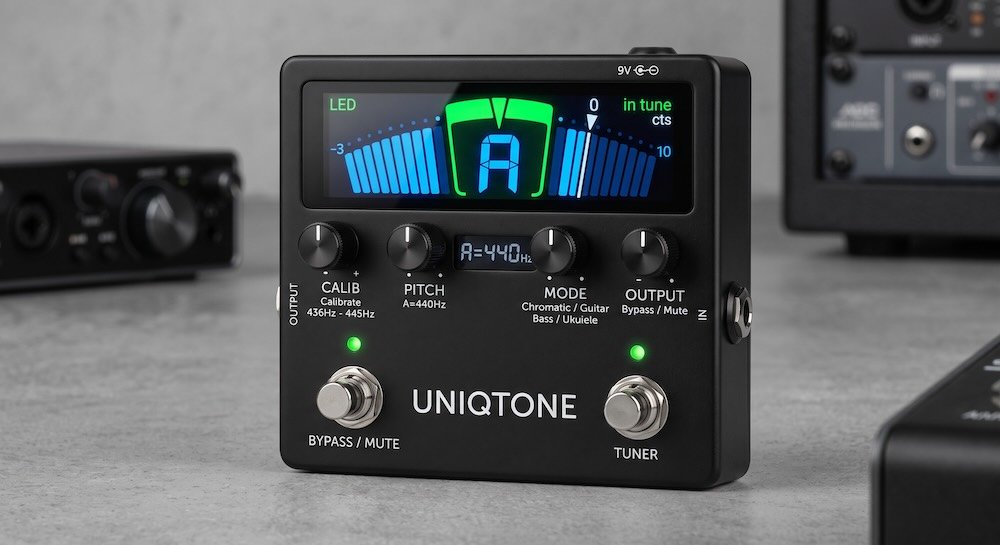
Looking for the best guitar tuner? The right tuner depends on how you play. A clip-on tuner is convenient for acoustic guitar and practice, while a pedal tuner is usually the better choice for electric guitarists performing with a pedalboard. Strobe tuners offer extremely precise tuning, while polyphonic tuners let you check multiple strings at once.
In this guide, we’ll explain the different types of guitar tuners, what makes a good tuner, and which type is best for different players and situations.
Quick Answer: What Is the Best Guitar Tuner?
For most guitarists, there isn’t one single best guitar tuner for every situation. The best choice depends on your instrument and how you play.
- Best for pedalboards: A dedicated guitar tuner pedal
- Best for acoustic guitar: A clip-on tuner
- Best for beginners: A simple chromatic tuner
- Best for fast tuning: A polyphonic tuner
- Best for maximum precision: A strobe tuner
- Best portable option: A rechargeable or battery-powered clip-on tuner
For an electric guitarist who already uses a pedalboard, a compact tuner pedal is often the most practical solution because it can be placed directly in the signal chain and used for quick, silent tuning between songs.
Best Guitar Tuners: Which Type Should You Choose?
| Tuner Type | Best For | Main Advantage |
|---|---|---|
| Clip-On Tuner | Acoustic guitar, beginners, practice | Portable and easy to use |
| Pedal Tuner | Electric guitar, bass, live performance | Fast, visible and pedalboard friendly |
| Chromatic Tuner | General guitar tuning | Works with standard and alternate tunings |
| Polyphonic Tuner | Fast tuning on stage | Checks multiple strings at once |
| Strobe Tuner | Recording, setup and precision tuning | Extremely fine pitch adjustment |
1. Guitar Tuner Pedals
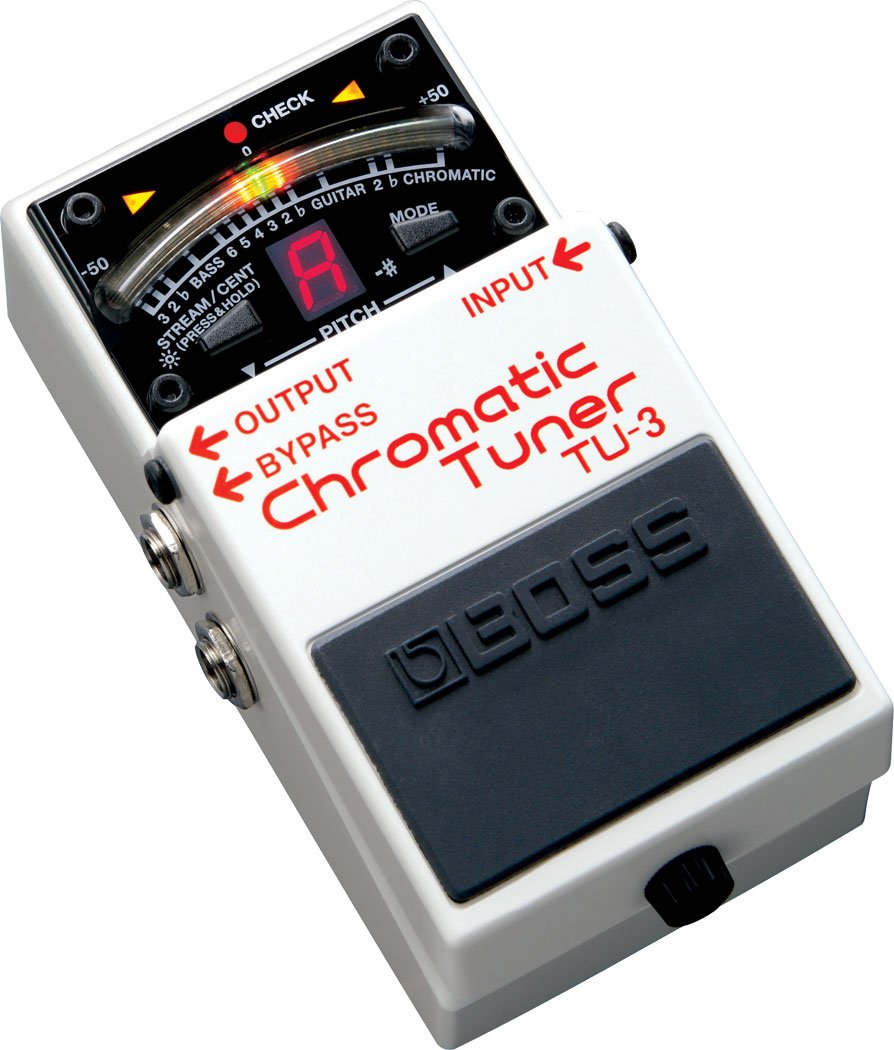
Boss TU-3 tuner pedal
A guitar tuner pedal is one of the most useful choices for electric guitarists who already have a pedalboard. Instead of using a microphone or clipping a tuner onto the guitar, the pedal receives the guitar signal directly through a standard 1/4-inch instrument cable.
Many tuner pedals also include a mute function, allowing you to tune silently during a live performance. This is particularly useful when changing strings, tuning between songs or making quick adjustments on stage.
Why Choose a Tuner Pedal?
- Designed specifically for pedalboard setups
- Easy to see while standing
- Direct guitar signal detection
- Many models provide silent tuning
- Compact and easy to integrate with effects pedals
- Suitable for electric guitar and bass
Best Guitar Tuner Pedal for a Compact Pedalboard
If pedalboard space is important, a mini guitar tuner pedal can be an excellent option. Compact tuner pedals take up less space while providing dedicated tuning control.
For example, the Uniqtone Mini Guitar Tuner Pedal uses a compact pedalboard-friendly enclosure and offers a tuning range from A0 to C8, 1-cent accuracy, strobe tuning and true bypass operation.
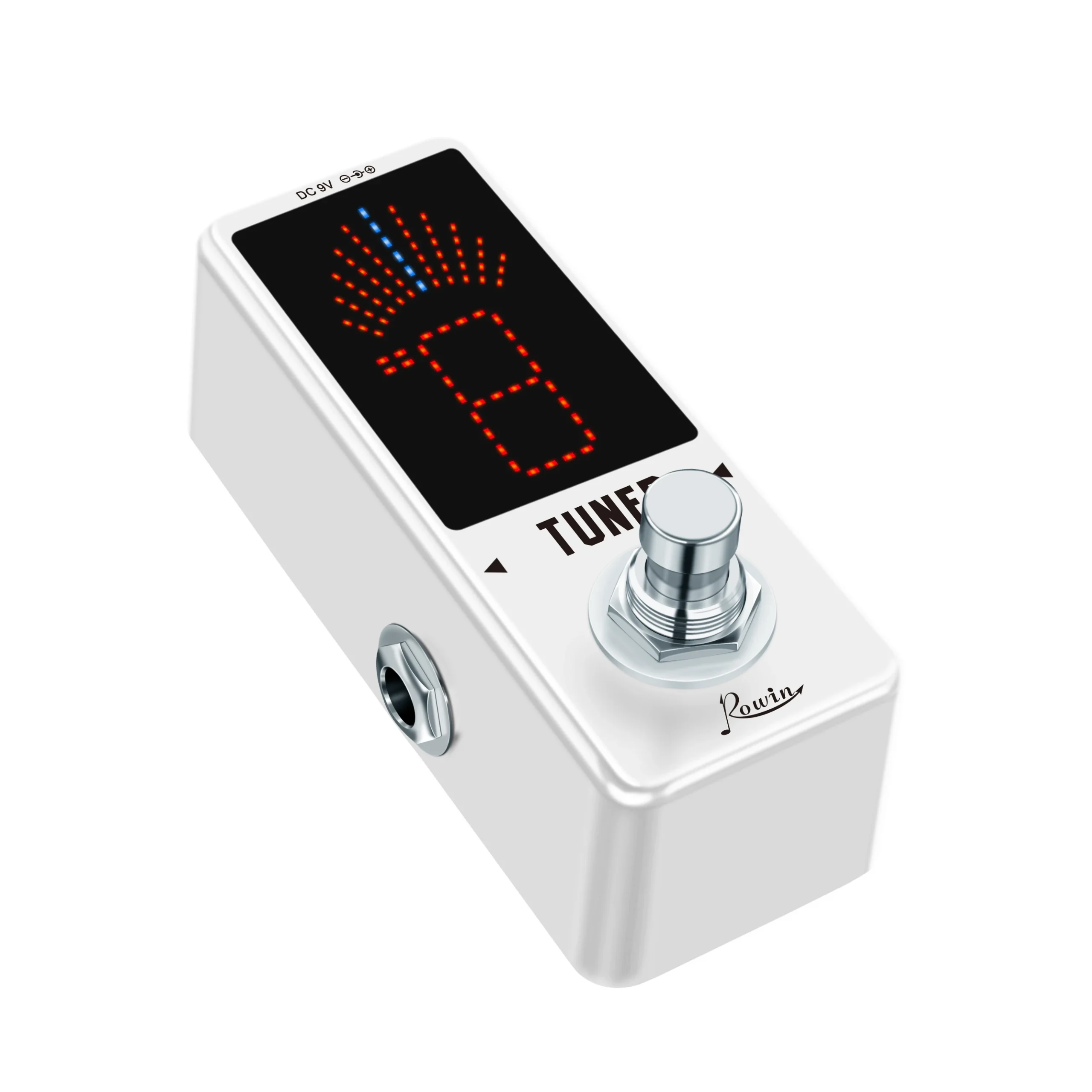 Explore the Mini Guitar Tuner Pedal
2. Clip-On Guitar Tuners
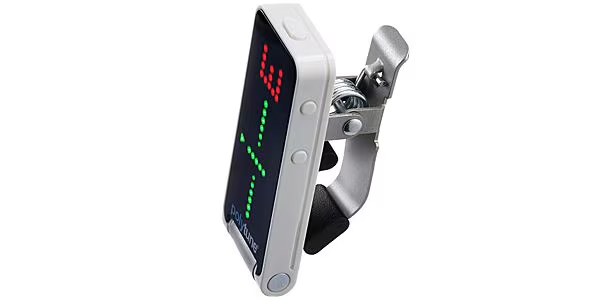
Clip-on guitar tuners attach directly to the headstock of your guitar and detect the instrument’s vibration. Because they don’t need to be connected to your guitar’s output, they’re particularly convenient for acoustic guitarists.
They’re also useful for beginners because they’re simple to operate: clip the tuner onto the headstock, play a string and adjust the tuning peg until the display shows that the note is in tune.
Who Should Use a Clip-On Tuner?
- Acoustic guitar players
- Beginners learning guitar
- Fingerstyle guitarists
- Songwriters
- Players who practice at home
- Musicians who want a backup tuner in their gig bag
Clip-on tuners are especially convenient because they don’t require an instrument cable. They can also work well in situations where using a microphone-based tuner would be inconvenient.
3. Chromatic Guitar Tuners
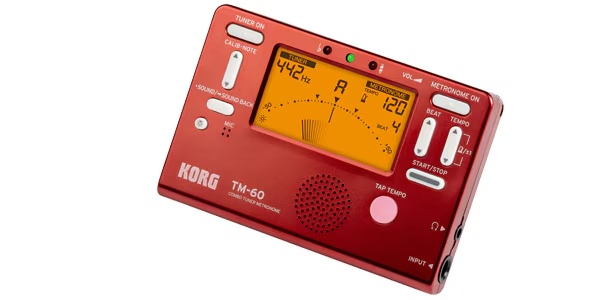
A chromatic guitar tuner detects the notes across the chromatic scale rather than being limited to standard guitar tuning.
This makes chromatic tuning particularly useful if you frequently use alternate tunings, open tunings or different instruments.
For example, a chromatic tuner can help you tune to standard tuning, Drop D, DADGAD, open G or other custom tunings as long as the tuner can detect the required pitch.
4. Polyphonic Guitar Tuners
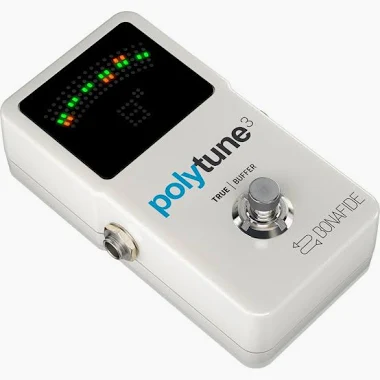
A polyphonic guitar tuner can analyze multiple strings simultaneously. Instead of checking every string individually, you can strum several strings and see which ones are sharp or flat.
This can make tuning faster, particularly when you’re preparing for a live performance.
Polyphonic tuning is now available in both pedal and clip-on formats. However, traditional single-note chromatic tuning remains useful when you want to make precise adjustments to individual strings.
5. Strobe Guitar Tuners
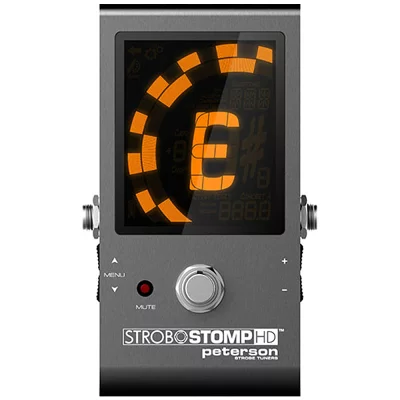
If tuning accuracy is your highest priority, a strobe tuner is worth considering.
Strobe tuners use a visual display that responds to extremely small changes in pitch. As the guitar approaches the target frequency, the visual movement slows down, allowing very fine adjustments.
Professional guitarists, guitar technicians and recording musicians often use strobe tuning when accuracy is particularly important.
Are Strobe Tuners More Accurate?
Generally, yes. Strobe tuners are designed for extremely precise pitch adjustment and can provide substantially finer resolution than basic chromatic tuners. However, that additional precision isn’t necessary for every guitarist.
For everyday practice and casual playing, a good chromatic tuner is usually more than accurate enough. Strobe tuning becomes more valuable when setting up a guitar, checking intonation or preparing an instrument for recording.
What Makes a Good Guitar Tuner?

When comparing the best guitar tuners, don’t look only at the advertised accuracy. Several other characteristics affect how useful a tuner is in real-world playing.
Accuracy
Tuning accuracy is usually expressed in cents. One semitone contains 100 cents, so a tuner capable of detecting very small fractions of a cent can provide extremely precise tuning.
For most guitarists, however, absolute maximum accuracy isn’t necessary. A tuner that is accurate, responsive and easy to read is often more useful than an ultra-precise tuner with a difficult display.
Display Visibility
A bright and easy-to-read display is particularly important for live performance. If you’re tuning on a dark stage, a small or dim display can make an otherwise accurate tuner frustrating to use.
Speed
A good guitar tuner should respond quickly when you play a note. Fast tracking is especially important when tuning between songs or during a live performance.
True Bypass and Signal Path
For pedalboard users, bypass design can also be important. A true-bypass tuner can remove the tuner from the signal path when bypassed, while buffered tuners can help maintain signal integrity across longer cable runs and larger pedalboards.
Power Requirements
Check whether the tuner uses a coin battery, AA or AAA batteries, USB charging, or a standard 9V DC pedal power supply.
For a permanent pedalboard, a 9V-powered tuner pedal can be convenient because it can share your existing pedalboard power system.
Best Guitar Tuner for Beginners
For a beginner, the best guitar tuner is usually one that is simple, accurate and easy to read rather than one with the largest number of advanced features.
A basic chromatic clip-on tuner is an excellent starting point for an acoustic guitar. If you’re learning electric guitar and already planning to build a pedalboard, a compact tuner pedal can make more sense because it can remain part of your rig as your setup grows.
Best Guitar Tuner for Acoustic Guitar
A clip-on tuner is usually the most convenient choice for acoustic guitar.
Because it detects vibration directly from the instrument, you don’t need to connect the guitar to an amplifier or audio interface. This makes it ideal for practice, songwriting, lessons and acoustic performances.
Best Guitar Tuner for Electric Guitar
For electric guitar, a tuner pedal is often the most practical choice, particularly if you already use effects pedals.
A pedal tuner can sit at the beginning of your signal chain and provide a dedicated footswitch for tuning. Many players also use tuner pedals for silent tuning between songs.
Best Guitar Tuner for Live Performance
For live performance, prioritize three things: speed, visibility and reliability.
A pedal tuner is often the best fit for an electric guitar rig because it can be operated with your foot and viewed while standing. A bright display is especially useful on stage.
Polyphonic tuning can also speed up the process when you need to check several strings quickly.
Best Guitar Tuner for Recording
Recording requires consistent tuning because even a small pitch difference can become noticeable when guitars are layered.
A high-precision chromatic or strobe tuner is a good choice when preparing guitars for recording. For critical sessions, it’s worth checking tuning before every take and again after changing strings or making significant adjustments.
Do You Really Need an Expensive Guitar Tuner?
Not necessarily.
Modern guitar tuners cover a wide range of prices, but spending more doesn’t automatically mean you’ll get a better result for your particular use case.
A beginner may get everything they need from a simple clip-on chromatic tuner, while a professional guitarist may value the additional accuracy, display quality, buffering and performance features of a dedicated tuner pedal.
The best guitar tuner is therefore the one that matches your instrument, playing environment and tuning requirements.
Guitar Tuner vs Tuner App
Smartphone tuning apps are useful and can be a convenient backup. However, a dedicated hardware tuner has several advantages.
- No phone notifications or distractions
- Dedicated controls and display
- Fast access during rehearsals and performances
- Clip-on tuners don’t require an internet connection
- Pedal tuners integrate directly into a guitar rig
A tuner app is excellent as a backup, but many guitarists prefer a dedicated tuner for regular practice and performance.
How to Choose the Best Guitar Tuner
Use this simple guide:
- Playing acoustic guitar? Choose a clip-on tuner.
- Playing electric guitar with pedals? Choose a tuner pedal.
- Need alternate tunings? Choose a chromatic tuner.
- Need very fast tuning? Consider a polyphonic tuner.
- Need maximum precision? Choose a strobe tuner.
- Travel frequently? Choose a compact battery or rechargeable tuner.
- Recording professionally? Consider a high-precision chromatic or strobe tuner.
Frequently Asked Questions About Guitar Tuners
What is the best guitar tuner overall?
There is no single best guitar tuner for every guitarist. A tuner pedal is generally an excellent choice for electric guitarists, while a clip-on tuner is more convenient for acoustic guitar. Players who need maximum precision may prefer a strobe tuner.
What is the most accurate type of guitar tuner?
Strobe tuners are generally considered the most precise type of guitar tuner. They are particularly useful for professional setup, intonation work and recording.
Are clip-on guitar tuners accurate?
Yes. Modern clip-on tuners can provide very good tuning accuracy and are a practical choice for everyday guitar tuning. They detect vibration through the instrument rather than relying solely on a microphone.
Are tuner pedals better than clip-on tuners?
Neither is universally better. A tuner pedal is usually more convenient for electric guitarists with pedalboards, while a clip-on tuner is more convenient for acoustic players and portable practice.
What is a chromatic guitar tuner?
A chromatic tuner detects notes across the chromatic scale, allowing you to tune to standard tuning as well as alternate and open tunings.
What is a polyphonic guitar tuner?
A polyphonic tuner can detect multiple strings simultaneously, allowing you to quickly see which strings are sharp or flat.
What is a strobe tuner?
A strobe tuner uses a highly sensitive visual display to show very small differences between the note being played and the target pitch. It is designed for extremely precise tuning.
Do guitarists need a tuner pedal?
No, but a tuner pedal is extremely useful for electric guitarists who use pedalboards. It provides quick access to tuning and can allow silent tuning during live performance.
Final Verdict: Which Guitar Tuner Is Best for You?
The best guitar tuner is ultimately the one that fits your playing style.
For acoustic guitar and everyday practice: choose a clip-on tuner.
For electric guitar and pedalboards: choose a dedicated tuner pedal.
For fast stage tuning: consider a polyphonic tuner.
For alternate tunings: choose a chromatic tuner.
For maximum precision: choose a strobe tuner.
If you are building a pedalboard, a compact tuner pedal is one of the most useful pedals to add early. It doesn’t change your guitar tone or add an effect, but it ensures every other pedal in your signal chain starts with the most important ingredient: an instrument that is in tune.

