


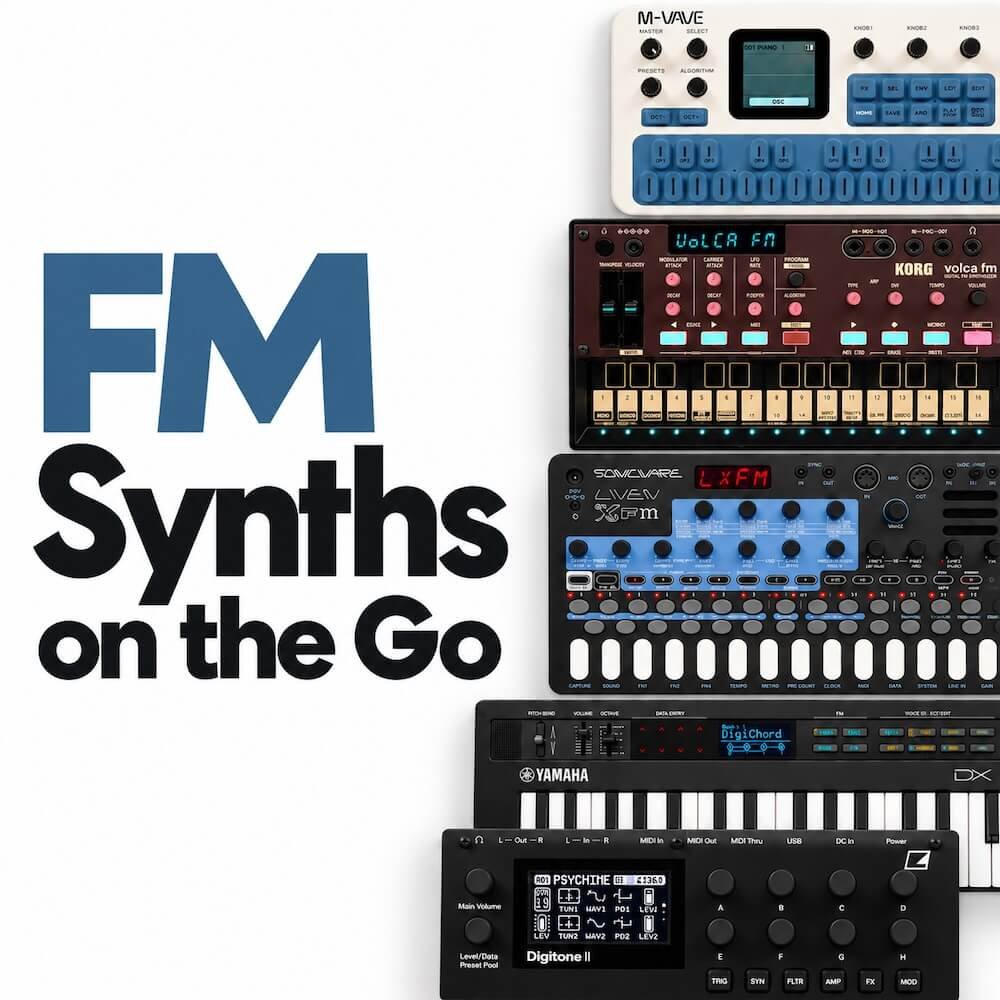
Looking for the best mini FM synthesizer for your home studio, lo-fi beats, ambient music or electronic productions? Compact FM synthesizers offer a practical way to create digital keys, metallic plucks, deep basses, evolving pads and unusual sound effects without filling your desk with expensive equipment.
For bedroom producers, a mini FM synth can be more than a small keyboard. It can be a standalone instrument for experimenting away from a computer, a hardware sound source for recording into a DAW, or a compact music-making tool for travelling and capturing new ideas.
In this guide, we compare five compact hardware synthesizers worth considering in 2027: the M-VAVE FM-1, Korg volca fm2, Sonicware LIVEN XFM, Yamaha Reface DX and Elektron Digitone II. They serve different budgets and workflows, so the best choice depends on whether you prioritise portability, hands-on sound design, sequencing or a more complete production instrument.
Editorial note: Prices and availability vary by market. Check current specifications and local retailer listings before purchasing.
Quick comparison: Best mini FM synthesizers
| Synthesizer | Best for | Main advantage |
|---|---|---|
| M-VAVE FM-1 | Portable, budget-conscious music makers | Built-in speaker, rechargeable battery and compact design |
| Korg volca fm2 | Classic digital sounds and compact sequencing | Six-operator FM synthesis and motion sequencing |
| Sonicware LIVEN XFM | Lo-fi beats and experimental electronic music | Four FM engines and a four-track sequencer |
| Yamaha Reface DX | Hands-on FM sound design | Four-operator FM synthesis with physical controls |
| Elektron Digitone II | Advanced electronic music production | Deep sequencing and a broader multitimbral workflow |
These instruments are not identical in size, price or capabilities. The FM-1 is a pocket-sized standalone synth, while the Reface DX is a larger keyboard instrument and the Digitone II is a more substantial production-focused synthesizer.
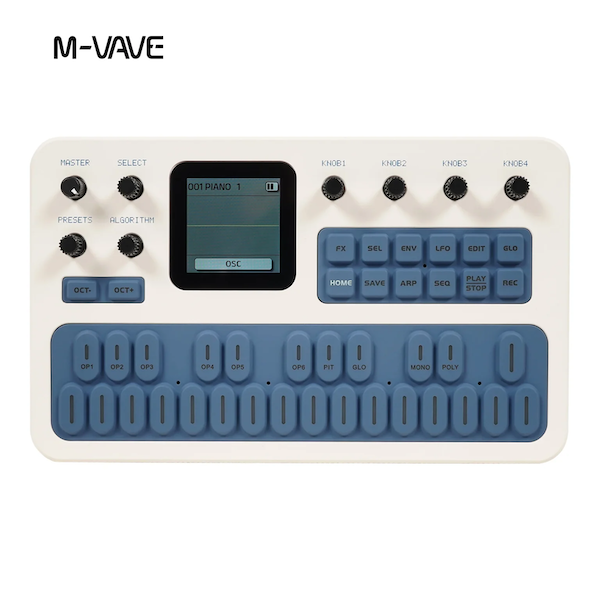 1. M-VAVE FM-1 — Best pocket FM synthesizer for bedroom producers
The M-VAVE FM-1 is worth considering if you want a small, self-contained FM synthesizer that can produce sound without requiring a computer, separate MIDI keyboard or external speaker.
Its six-operator FM engine and 32 algorithms provide a foundation for a broad range of digital tones, from piano-like sounds and basses to bright plucks, synthetic bells and atmospheric textures. It also includes 128 factory presets, six built-in effects, an arpeggiator and a 16-step sequencer.
Key features
- Six-operator FM synthesis with 32 algorithms
- 128 factory sounds and support for compatible FM SysEx sound banks
- Built-in speaker and rechargeable 2,000 mAh battery
- USB-C MIDI, Bluetooth MIDI and 3.5 mm MIDI input
- Six effects, including reverb, delay, chorus and phaser
- Arpeggiator and 16-step sequencer
- Up to approximately 12 hours of battery life, depending on use
One of the biggest advantages of the FM-1 is its portability. You can experiment with sounds at your desk, on the sofa or while travelling, then connect it to a computer or compatible recording setup when you want to develop an idea into a finished track.
For lo-fi producers, try using its digital keys as the starting point for a mellow chord progression. Record the audio into your DAW, add gentle saturation and reverb, and layer the result with guitar samples, vinyl textures or soft drums. For ambient music, sustained FM tones and delay can help create evolving backgrounds.
Best for: Beginners exploring hardware synthesis, portable music making and producers who want an affordable way to add FM sounds to a DAW-based setup.
Consider before buying: Its small silicone keyboard is designed around portability rather than a conventional piano-playing experience. If detailed sound editing and extensive hands-on controls are your priority, a larger instrument may be more comfortable.
Explore the M-VAVE FM-1 at Uniqtone
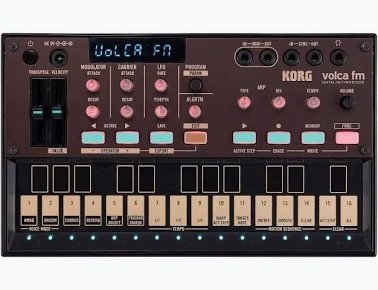 2. Korg volca fm2 — Best for classic FM sounds and compact sequencing
The Korg volca fm2 is a compact digital synthesizer built around six-operator FM synthesis. Its architecture uses 32 algorithms and supports compatible DX7 SysEx sound data, making it particularly interesting for producers who enjoy classic digital keyboard sounds.
The instrument offers six-voice polyphony, 64 programs, a built-in arpeggiator, chorus, reverb and a 16-step sequencer with motion sequencing. It can run on six AA batteries or an optional AC adapter.
Why bedroom producers might like it
The volca fm2 is well suited to creating short melodic patterns, bright electric-piano parts, bass sequences and digital accents. Its sequencer makes it possible to generate ideas directly on the instrument rather than programming every note in a DAW.
It also works well as a hardware sound source in a hybrid studio. Connect it to your recording setup, sequence it through MIDI where appropriate, and capture its audio for further processing.
Best for: Producers who want classic FM tones, compact sequencing and a dedicated instrument for riffs, arpeggios and short patterns.
Consider before buying: The small touch keyboard and compact controls are not intended to replace a full-sized MIDI keyboard. Its onboard effects and sound-editing workflow are also more focused than those of some larger synthesizers.
Official specifications: https://www.korg.com/us/products/dj/volca_fm2/specifications.php
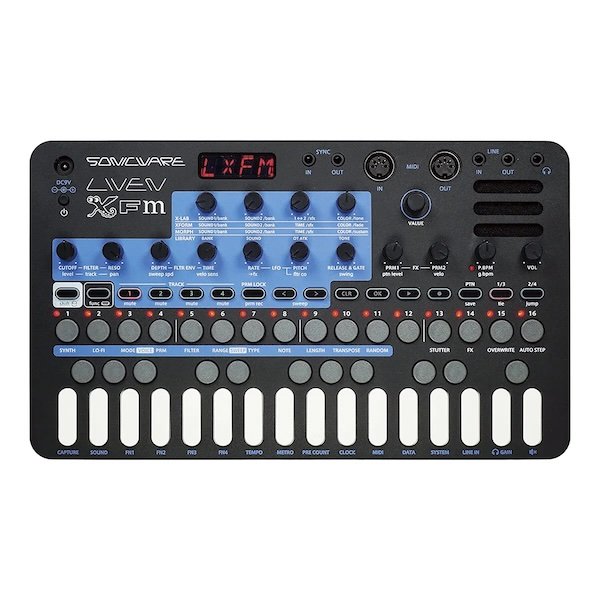 3. Sonicware LIVEN XFM — Best for experimental FM beats
The Sonicware LIVEN XFM takes a more production-oriented approach to compact FM synthesis. Rather than focusing only on playing individual sounds, it combines several FM synthesis engines with sequencing and pattern-based music creation.
Its four FM engines include X-LAB, XFORM, X-LFO and LIBRARY. It offers six-voice polyphony, 512 sound-memory slots, a four-track step sequencer with up to 64 steps, and a range of effects.
What makes it useful?
The LIVEN XFM is particularly appealing if you like building tracks from short patterns. Its sound-morphing and sound-combination approaches encourage experimentation, while its sequencer gives you a way to turn those experiments into rhythmic arrangements.
For lo-fi hip-hop, try pairing a soft FM keyboard sound with a short bass pattern and a dusty drum loop. For ambient music, experiment with slow-moving tones, long effects and contrasting patterns. Its approach is also useful for experimental electronica, IDM-inspired rhythms and unusual digital percussion.
Best for: Bedroom producers who want a compact groovebox-style instrument for generating patterns, sound design and experimental electronic music.
Consider before buying: It is larger than a pocket synth and has a more involved workflow than a simple preset instrument. Its emphasis on sequencing may also be unnecessary if you mainly want to play keyboard parts and record them into your DAW.
Official product page: https://sonicware.jp/products/liven-xfm
4. Yamaha Reface DX — Best for hands-on FM sound design
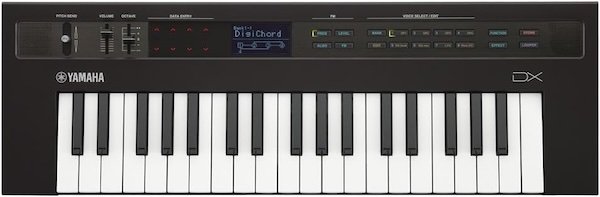
The Yamaha Reface DX is a compact keyboard synthesizer built around four-operator FM synthesis. Compared with very small pocket instruments, its mini-keyboard format and dedicated controls make it a more traditional instrument for playing and shaping sounds.
It provides hands-on access to FM parameters, onboard effects and phrase-oriented performance features. This makes it attractive to musicians who want to understand how FM tones are created rather than relying entirely on presets.
Why choose it?
FM synthesis can produce everything from soft electric-piano tones to sharp metallic percussion, plucked basses and complex evolving sounds. The Reface DX gives you a practical interface for exploring those possibilities while playing notes and adjusting parameters.
It can be especially useful for producers who enjoy recording individual phrases, chords and melodies into Logic Pro, Ableton Live or another DAW. You can record a performance as audio, process it with plugins and combine it with samples or guitars.
Best for: Keyboard players who want a compact but playable instrument with accessible FM sound design.
Consider before buying: It is less pocketable than the FM-1 and volca fm2. Its four-operator engine is also different from the six-operator architecture found in the FM-1 and volca fm2.
5. Elektron Digitone II — Best for a more advanced FM production setup
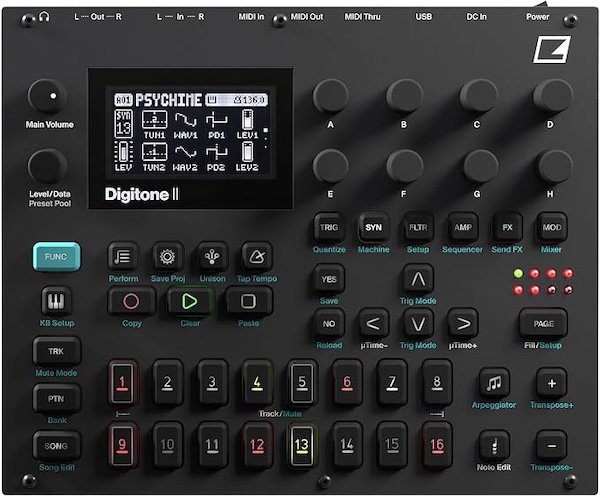
The Elektron Digitone II is worth considering if you want to move beyond a small standalone synth into a more comprehensive electronic music production instrument. It combines FM-based sound generation with extensive sequencing, performance controls and a multitimbral workflow.
Rather than being designed primarily as a pocket instrument, it is intended to serve as a central part of a hardware or hybrid studio.
Why it stands out
For producers building complete electronic arrangements, advanced sequencing and sound manipulation can be more valuable than having a built-in speaker or battery. A production-focused instrument can help you develop patterns, variations and layered parts before recording or integrating them with other equipment.
It may suit producers who work with intricate rhythms, evolving synth parts and multiple layers of sound. It can also complement a DAW-based workflow if you prefer creating patterns on hardware and then recording or arranging the results in software.
Best for: Experienced producers seeking a deeper sequencing and sound-design environment.
Consider before buying: It is in a different size, complexity and budget category from the small portable instruments in this guide. Check the current official specifications and price before comparing it directly with pocket synthesizers.
What can you make with a mini FM synthesizer?
FM synthesis is useful because relatively small changes in modulation can create dramatically different timbres. That makes it an excellent source of sounds that complement samples, acoustic instruments and conventional subtractive synthesizers.
Here are five practical applications for a bedroom studio.
Lo-fi hip-hop and chill beats
Use mellow FM keys, soft bell tones and short plucks to build chord progressions and melodies. Record the part into your DAW, then add subtle saturation, reverb and filtering to blend it with dusty drums, guitar samples or background noise.
Ambient and cinematic music
Longer FM tones can work as evolving textures or atmospheric layers. Combine a sustained sound with delay, reverb and automation to create movement without overcrowding the arrangement.
Electronic bass and percussion
FM synthesis can create bright, punchy basses and metallic percussive sounds. Short envelopes and changes to modulation depth can make a sound more focused and rhythmic.
Indie, pop and guitar-based productions
A compact FM synth can add a contrasting digital layer to a guitar-driven track. Try a simple electric-piano-like sound, a bell melody or a subtle pad behind your guitar part.
Sampling and sound design
Record short notes, chords or evolving phrases into your DAW and turn them into your own sample library. You can chop them into a sampler, reverse them, pitch them down or combine them with other recordings.
What should you look for when buying a mini FM synthesizer?
The best mini FM synthesizer depends on how you prefer to make music. Before choosing one, consider these five factors.
1. Standalone operation. If you want to make music without a computer, look for an instrument with its own sound engine, an audio output and a built-in speaker or headphone connection. A MIDI controller alone does not generate sound.
2. FM architecture. Four-operator and six-operator engines offer different sound-design possibilities. More operators can enable more complex modulation structures, but the interface and editing workflow also matter.
3. Sequencing. An onboard arpeggiator or step sequencer is useful for creating patterns and generating ideas without opening your DAW. If you already arrange everything in software, this feature may be less important.
4. Connectivity. Check whether the synthesizer supports USB MIDI, Bluetooth MIDI, conventional MIDI or audio connections that match your setup. MIDI transfers performance data; it is not the same as an audio signal.
5. Portability and power. A rechargeable battery and built-in speaker can make a major difference if you want to compose away from your desk. For a permanent studio setup, a larger interface and more hands-on controls may be preferable.
Mini FM synthesizer vs. software FM synth: Which is better?
A hardware FM synthesizer and a software FM instrument can both be excellent choices for bedroom producers. The better option depends on your budget, workflow and approach to sound design.
| Factor | Mini hardware FM synth | Software FM synth |
|---|---|---|
| Portability | Can work independently if battery-powered | Usually requires a computer or compatible mobile device |
| Hands-on experience | Dedicated physical controls | Depends on the software interface and controller |
| Sound integration | Requires audio recording or suitable audio routing | Usually integrates directly into the DAW |
| Sequencing | Depends on the instrument | Can use the DAW’s piano roll and automation |
| Creative workflow | Encourages focused, instrument-based experimentation | Makes editing, recall and arrangement convenient |
You do not need to choose one approach exclusively. A compact hardware synthesizer can be used to create original sounds, while your DAW handles arrangement, mixing and effects.
Frequently asked questions
What is the best mini FM synthesizer for beginners?
The M-VAVE FM-1 is worth considering if portability, standalone operation and a low barrier to experimentation are your priorities. The Korg volca fm2 is another option if you prefer a compact instrument with classic six-operator FM architecture and pattern sequencing.
Is the M-VAVE FM-1 a real synthesizer or just a MIDI controller?
The M-VAVE FM-1 is a standalone FM synthesizer. It generates its own sound using a six-operator FM engine and can play through its built-in speaker or headphone output. It also supports MIDI connections for use with computers and other compatible equipment.
Can you use a mini FM synthesizer with Logic Pro?
Yes. Compatible hardware can be connected to Logic Pro through MIDI for note and control data, while its audio output can be recorded through an audio interface or another suitable input. The exact setup depends on the synthesizer’s connections and your recording equipment.
Are mini FM synthesizers good for lo-fi music?
Yes. FM synthesizers can produce electric-piano-like tones, bells, soft plucks, basses and unusual textures that work well in lo-fi hip-hop, ambient and chill electronic music. The final character depends on the patch, performance and processing rather than the synthesis method alone.
Does a MIDI keyboard need a synthesizer to make sound?
A standard MIDI controller does not generate sound by itself. It sends MIDI messages to a software instrument, sound module or hardware synthesizer. A standalone synthesizer such as the M-VAVE FM-1 combines a sound engine with its own playing interface.
Is a six-operator FM synthesizer better than a four-operator model?
Not automatically. Six-operator FM can provide more complex modulation structures and a broader range of possible timbres. Four-operator instruments can still be highly capable, and their controls or workflow may suit your music-making style better.
Final verdict: Which mini FM synth should you choose in 2027?
For bedroom producers, the best choice is the synthesizer that fits your actual workflow rather than the one with the longest feature list.
- Choose the M-VAVE FM-1 if you want a pocket-sized, rechargeable, standalone FM synth for spontaneous music making and portable sound design.
- Choose the Korg volca fm2 if you want classic six-operator FM sounds in a compact instrument with sequencing.
- Choose the Sonicware LIVEN XFM if you enjoy building experimental electronic music from patterns and multiple FM engines.
- Choose the Yamaha Reface DX if you want a more conventional keyboard-playing experience with hands-on FM editing.
- Consider the Elektron Digitone II if you need a more advanced instrument for sequencing and electronic music production.
If you’re building a small home studio, a mini FM synthesizer can be a useful complement to your MIDI keyboard, guitar, sampler and DAW. Even a single distinctive FM sound can give a track a character that is difficult to achieve with another layer of the same instruments.
For producers who value portability and immediate access to hardware sounds, the M-VAVE FM-1 is a particularly interesting place to start exploring FM synthesis.

