


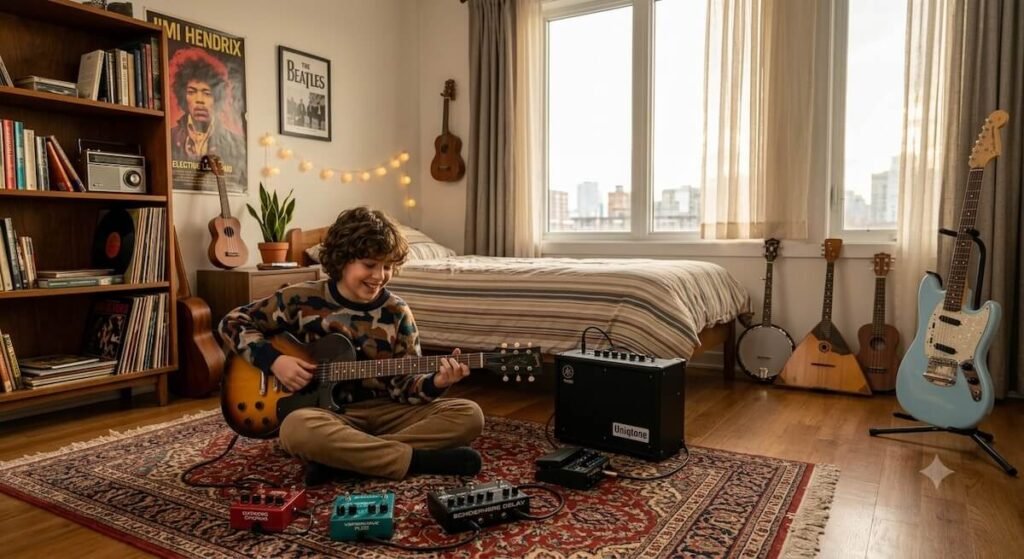
Many children are excited when they first receive a guitar, but after a few weeks, that excitement can disappear. The guitar ends up sitting in a corner while video games, YouTube, and social media become far more appealing.
The good news is that this doesn’t mean your child isn’t musical. More often, it means they’re not having enough fun yet.
Learning guitar shouldn’t feel like homework. It should feel like an adventure where every practice session leads to discovering new songs, new sounds, and new creative ideas.
Here are ten practical ways to help your child fall in love with playing guitar.
Let Them Play Music They Already Love
One of the biggest mistakes beginners make is learning songs they don’t enjoy.
Children are much more motivated when they recognize the music they’re playing.
Encourage them to learn songs from:
- Animated movies
- Video games
- TV shows
- Pop artists
- Their favorite YouTubers
Even playing a simple melody they recognize gives them a sense of achievement and encourages them to keep practicing.
Keep Practice Sessions Short
Young players don’t need hour-long practice sessions.
In fact, shorter sessions often produce better results.
Aim for:
- 10–15 minutes for younger children
- 20–30 minutes for older beginners
It’s much better to practice for 15 enjoyable minutes every day than for an hour once a week.
Consistency builds confidence.
Celebrate Small Wins
Learning guitar takes time, and children can become discouraged if they only focus on what they can’t do yet.
Celebrate every milestone, such as:
- Learning the first chord
- Playing their first song
- Keeping good rhythm
- Changing chords smoothly
- Playing in front of family
Positive encouragement builds confidence and keeps motivation high.
Make Practice Feel Like a Game
Kids naturally enjoy games because they offer challenges and rewards.
Bring that same feeling into guitar practice.
Try activities like:
- Learn one new riff today.
- Play without making a mistake.
- Beat yesterday’s practice time.
- Create a new melody in five minutes.
- Copy a rhythm by ear.
Turning practice into small challenges makes learning much more engaging.
Encourage Creativity Instead of Perfection
Many beginners think every note has to be perfect.
Instead, encourage your child to experiment.
Ask questions like:
- Can you make your guitar sound like thunder?
- Can you write a song for a superhero?
- Can you create a spooky Halloween soundtrack?
- Can you invent your own guitar riff?
When children create their own music, they develop confidence, imagination, and a stronger connection to the instrument.
Introduce Guitar Effects at the Right Time
Once a child can play a few chords or simple songs, adding a guitar pedal can completely change the experience.
Suddenly, they aren’t just practicing—they’re exploring.
Effects like overdrive, delay, and chorus make even simple songs sound exciting.
Some beginner-friendly choices include:
Vintage Overdrive Mini Pedal
Perfect for adding warmth and energy to everyday practice.
Analog Delay Mini Pedal
Creates echo effects that encourage creative playing and experimentation.
Classic Chorus Mini Pedal
Adds depth and sparkle to clean guitar sounds.
These pedals are affordable, easy to use, and often inspire children to spend more time playing because they can hear their guitar transform with the press of a footswitch.
Turn Screen Time into Creative Time
Today’s kids spend a lot of time watching videos or playing games.
Music offers something different.
Instead of consuming entertainment, they become the creator.
A guitar, an amplifier, and a simple effects pedal can inspire hours of imagination.
Rather than saying, “Stop using screens,” try saying:
“Let’s create something together.”
That small shift changes the focus from restriction to creativity.
Let Them Experiment with Different Sounds
Children are naturally curious.
They love asking:
“What happens if I press this?”
Guitar effects encourage exactly that kind of exploration.
Challenge them to create sounds like:
- A spaceship
- Rain falling
- Ocean waves
- A robot
- A monster
- A racing car
There are no wrong answers.
Experimenting helps children associate guitar with creativity instead of routine practice.
Play Together Whenever Possible
Children are far more likely to stay interested when music becomes a shared activity.
You don’t need to be an experienced musician.
Try:
- Clapping rhythms together
- Singing while they play chords
- Playing along with backing tracks
- Taking turns creating melodies
The goal isn’t perfection.
The goal is making music together.
Give Them Gear That Inspires Them
You don’t need expensive equipment to keep a beginner motivated.
Simple upgrades can make a huge difference.
Great beginner gifts include:
- Vintage Overdrive Mini Pedal
- Analog Delay Mini Pedal
- Essential Mini Pedal Bundle (4 Effects)
- Guitar Pick Set
- Mini Pedal Patch Cable Set
- Guitar Mini Looper
Each of these products helps make practice more enjoyable without overwhelming a beginner.
Remember That Every Child Learns Differently
Some children enjoy structured lessons.
Others learn by experimenting.
Some love rock music.
Others enjoy movie soundtracks or relaxing ambient sounds.
Allow your child to discover what excites them instead of trying to fit everyone into the same learning path.
When learning feels personal, motivation naturally follows.
Why Creativity Keeps Kids Playing
Many hobbies teach children to follow instructions.
Music teaches them to create.
A guitar becomes much more than an instrument when children begin asking questions like:
- What kind of sound can I make today?
- Can I write my own song?
- Can I sound like my favorite guitarist?
- What happens if I combine two different effects?
That curiosity is what keeps many young musicians playing for years.
Frequently Asked Questions
What age should a child start learning guitar?
Many children can begin learning around the ages of 6 to 8 with an appropriately sized guitar, although older beginners often progress more quickly because they can concentrate for longer periods.
How long should kids practice guitar each day?
For beginners, 10–20 minutes of focused practice is usually more effective than long sessions. Regular, enjoyable practice builds better habits than occasional marathon sessions.
Do guitar pedals help beginners?
Yes. While pedals aren’t necessary for learning the basics, they can make practice more exciting by introducing new sounds and encouraging creativity. Many beginners become more motivated when they hear their guitar sound like the music they love.
What’s the best first guitar pedal for a child?
An overdrive pedal is often the best first choice because it’s simple to use and works well with almost every style of music. Delay pedals are another great option for encouraging creative exploration.
Final Thoughts
Keeping a child interested in guitar isn’t about making them practice longer—it’s about giving them reasons to want to play.
When guitar becomes a creative outlet rather than another task, children naturally spend more time with the instrument.
At Uniqtone, we believe every young guitarist deserves gear that inspires creativity, curiosity, and confidence. Our beginner-friendly mini pedals and affordable guitar accessories are designed to make playing more exciting, helping kids spend less time consuming entertainment and more time creating music of their own.

