


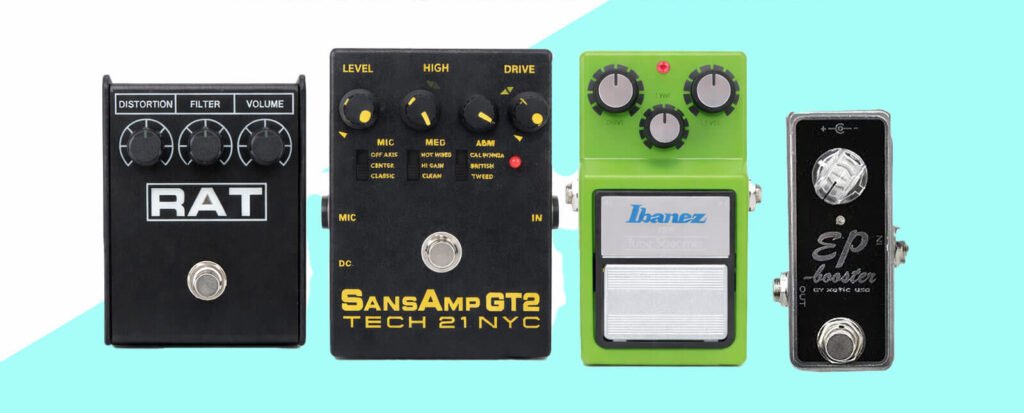
When building a guitar pedalboard, many players ask the same question:
What’s the difference between preamp, overdrive, and boost pedals — and which one do I actually need?
Although these pedals are often grouped together as “gain pedals,” they each play a very different role in shaping your guitar tone. Understanding how they work will help you choose the right pedal for your amp, playing style, and genre.
What Is a Preamp Pedal?
A preamp pedal recreates or replaces the front end of a guitar amplifier. It shapes your core tone by controlling EQ, gain structure, and overall character before the signal hits a power amp, effects loop, or recording interface.
What preamp pedals do:
-
Shape your main guitar tone
-
Add clean headroom or mild saturation
-
Emulate amp channels or classic amp circuits
-
Provide consistent tone at any volume
Best uses for preamp pedals:
-
Pedalboard-only or ampless rigs
-
Direct recording with IR loaders
-
Players who want amp-like tone from a pedal
What Does “Gain” Mean on a Guitar Pedal?
Gain is not a pedal type — it’s a control.
Gain determines how much your signal is amplified before it clips. As gain increases, the sound becomes more saturated, compressed, and distorted. You’ll find gain controls on preamp, overdrive, distortion, and fuzz pedals.
Higher gain means:
-
More distortion and sustain
-
More compression
-
Less clean dynamic range
Understanding gain helps you control how dirty your sound gets, regardless of the pedal.
What Is an Overdrive Pedal?
An overdrive pedal is designed to simulate the sound of a tube amp pushed into natural breakup. Overdrives are known for their dynamic response and ability to clean up with your guitar’s volume knob.
Overdrive pedal characteristics:
-
Warm, musical distortion
-
Touch-sensitive response
-
Smooth clipping instead of harsh distortion
Best for:
-
Blues and classic rock
-
Edge-of-breakup tones
-
Stacking with other gain pedals
What Is a Boost Pedal?
A boost pedal increases signal level without adding distortion on its own. What happens next depends entirely on where the boost is placed in your signal chain.
Types of boost pedals:
-
Clean boost – increases volume without coloration
-
Colored boost – adds subtle EQ or character
-
Treble boost – emphasizes upper mids and highs
How boost pedals are used:
-
Before an amp or overdrive: pushes them into breakup
-
After a drive pedal: increases volume for solos
-
Before a preamp: tightens response and clarity
A boost pedal doesn’t create distortion — it pushes what’s already there.
Preamp vs Overdrive vs Boost: Key Differences
| Pedal Type | Adds Distortion | Main Purpose | Dynamic Feel |
|---|---|---|---|
| Preamp | Sometimes | Tone shaping / amp character | Medium |
| Boost | No (by itself) | Increase signal level | High |
| Overdrive | Yes | Amp-like breakup | High |
| Distortion | Yes (heavy) | Consistent saturation | Medium |
| Fuzz | Yes (extreme) | Texture and sustain | Low |
Which Pedal Should You Get?
Choose a boost pedal if:
-
You want more volume for solos
-
You want to push your amp or overdrive harder
-
You want minimal tone coloration
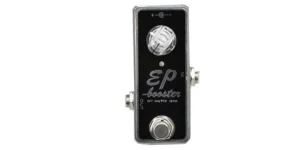
Xotic EP Booster is a well-known and highly rated boost pedal.
Choose an overdrive pedal if:
-
You want warm, dynamic distortion
-
You play blues, rock, or classic styles
-
You want gain that responds to your playing
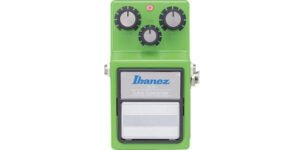
Ibanez Tube Screamer (TS808 / TS9) – Mid-focused, iconic overdrive
Choose a preamp pedal if:
-
You want to define your core tone
-
You play through multiple amps or direct
-
You want amp-like character from a pedal
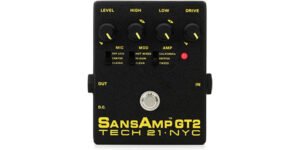
Tech 21 SansAmp Series – Industry standard for amp emulation
Many players use all three together.
Gain Stacking Tips
-
Boost → Overdrive: tighter, more focused drive
-
Overdrive → Preamp: layered, amp-like gain
-
Boost → Amp: natural tube saturation
-
EQ → Gain: shapes how distortion reacts
Stacking pedals is one of the most effective ways to create unique tones.
Final Thoughts: Understanding Drive Pedals
Think of gain pedals like this:
-
Boost pedals push the signal
-
Overdrive pedals add feel and breakup
-
Distortion and fuzz add intensity
-
Preamp pedals define your overall voice
There’s no single “best” pedal — only the one that fits your rig and your music.
