


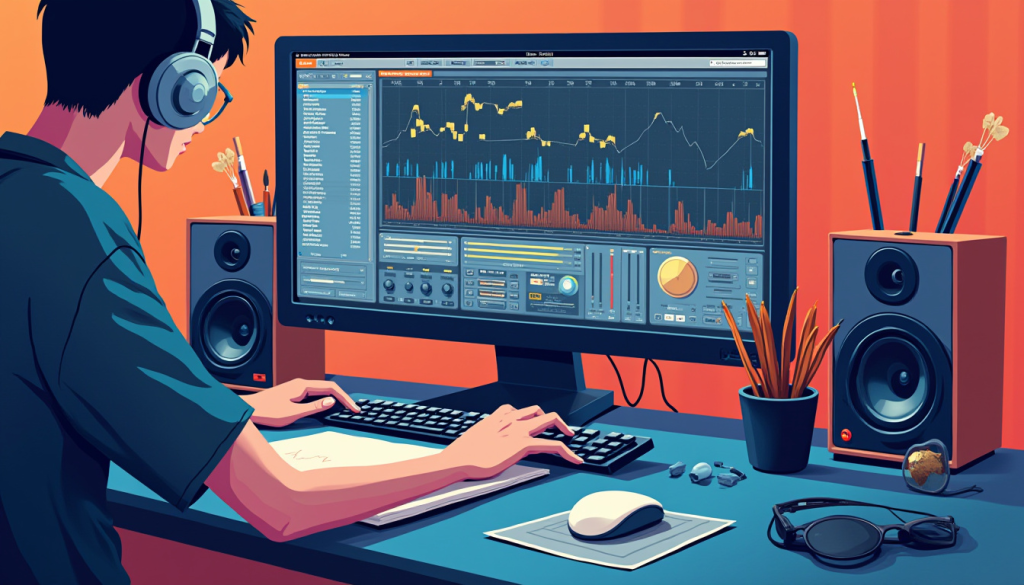
The music industry has always evolved with technology, from analog recording to digital workstations. Today, artificial intelligence (AI) is making waves in music production, composition, and even live performance. AI tools like ChatGPT, Amper Music, and LANDR are revolutionizing songwriting and production, reshaping the way artists create and refine their work. But how exactly are these tools changing the landscape of music creation? Let’s explore their impact.
Useful AI Tools used in Songwriting and Production
- AI-Assisted Lyric Writing (ChatGPT):
- ChatGPT helps musicians generate song lyrics by providing ideas, themes, and rhyming structures.
- It acts as a brainstorming partner, allowing artists to refine their lyrical content and overcome writer’s block.
- While it doesn’t replace human creativity, it accelerates the songwriting process and opens up new creative possibilities.
- AI-Generated Music (Amper Music):
- Amper Music creates entire compositions in minutes, helping artists and content creators generate backing tracks with minimal effort.
- This tool is particularly useful for film scoring, podcast intros, and game soundtracks where custom music is needed quickly.
- By offering customizable parameters, it allows musicians to tweak compositions to fit their style.
- Automated Mixing and Mastering (LANDR):
- LANDR provides instant mastering solutions, helping artists achieve a polished, radio-ready sound.
- It applies AI-driven algorithms to balance frequencies, adjust dynamics, and enhance clarity.
- Independent musicians benefit from high-quality mastering without needing expensive studio sessions.
Benefits of AI in the Music Industry
- Increased Accessibility: AI tools enable independent artists to produce professional-grade music at a lower cost.
- Faster Production Workflow: Automating time-consuming tasks like beat-making and mastering speeds up the creative process.
- Creative Inspiration: AI-generated ideas serve as a foundation for unique compositions and lyrical content.
- Democratization of Music Creation: Those with minimal musical training can now create and share music more easily.
Challenges and Ethical Concerns
- Originality vs. Automation: Can AI-generated music truly be original, or is it just mimicking patterns from existing songs?
- Job Displacement: As AI tools become more advanced, could they replace human producers and composers?
- Copyright Issues: Who owns the rights to AI-generated compositions? Artists, developers, or the AI itself?
- Emotional Connection: Can AI truly replicate the human emotion and depth found in traditional songwriting?
The Future of AI in Music
While AI will likely never replace human creativity, it is becoming an essential tool for artists and producers. The future may see more collaborations between musicians and AI, where technology enhances rather than replaces the creative process. Artists who embrace AI-driven tools can push creative boundaries while maintaining their unique artistic voice.
Conclusion
AI is revolutionizing songwriting and production, making music creation faster, more accessible, and increasingly innovative. While challenges remain, AI’s role in music will only grow, influencing how we create and experience sound. The key is finding the right balance between technology and human artistry, using AI as a tool to enhance rather than replace creativity.
